
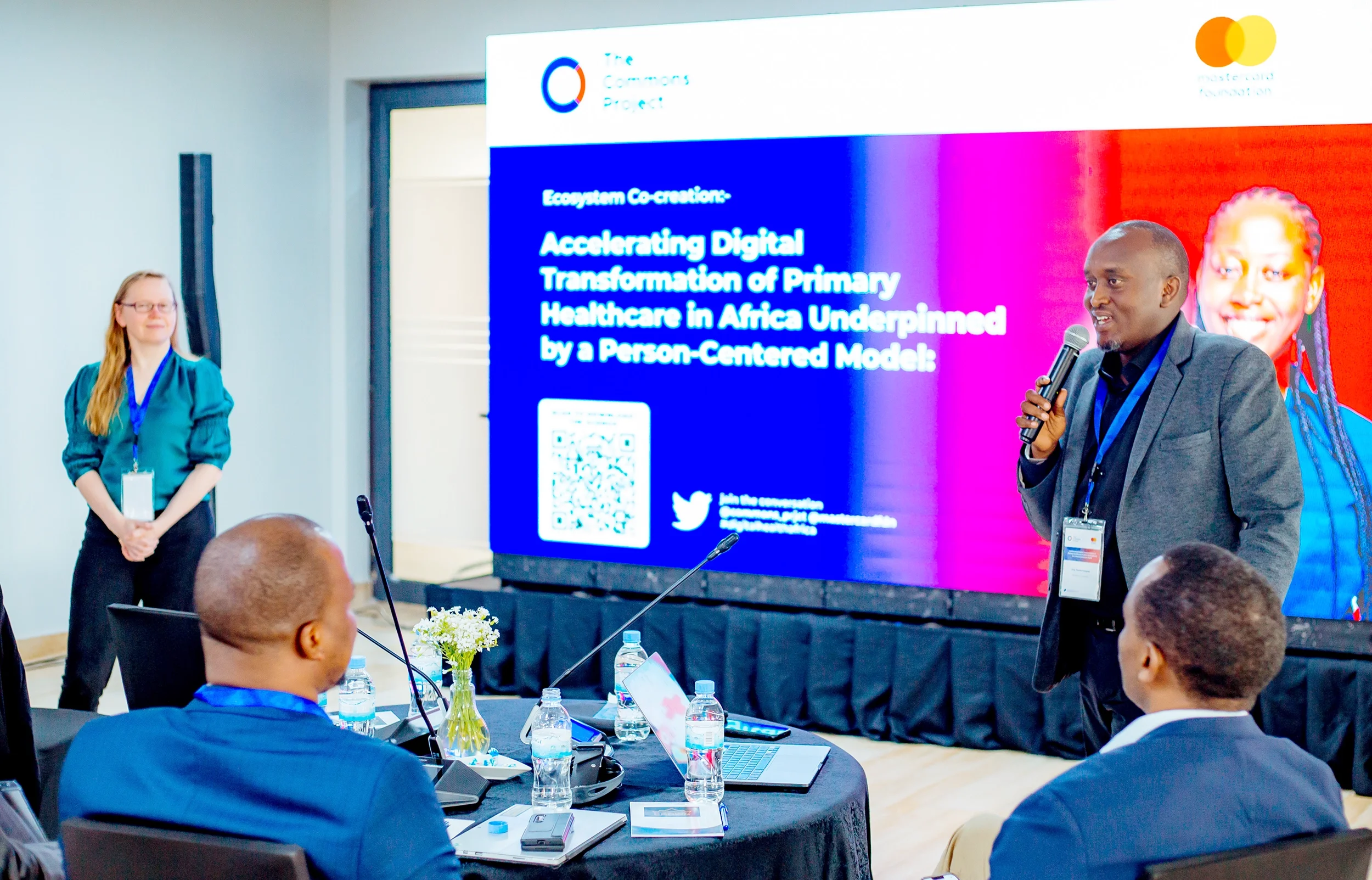
Great technology isn't enough. We work to change the rules at standards bodies, agencies, and global institutions so open, person-centered health data becomes the default.
What We Advocate For
Real patient access - not the bare minimum to check a box, but data people can actually use, hold, and share.
Open, royalty-free standards as the foundation of digital health.
Strong privacy protections, informed consent, and clear individual data rights.
Equitable access across devices, income levels, and countries.
Interoperability across providers, payers, devices, and borders.
Public investment in the digital health infrastructure that markets won't build alone.
Standards We Champion
| HL7 FHIR | The modern, web-native standard for exchanging clinical data. |
| SMART Health Cards (SHCs) | Verifiable, portable digital health credentials brought to the world by the Vaccination Credential Initiative (VCI), co-created and co-led by The Commons Project. |
| SMART Health Links (SHLs) | Extends SMART Health Cards to larger, dynamic data sharing applications like clinical summaries and insurance coverage. |
| International Patient Summary (IPS) | The WHO-aligned standard for essential health data. The Commons Project built the first production International Patient Summary + SMART Health Links combination. |
| CARIN Digital Insurance Card | The Commons Project co-led development of this HL7 standard with the CARIN Alliance. |
| IEEE & Open mHealth | Standards for safely integrating wearables and medical devices. |
How We Show Up
Standards Development
We help shape, test, and advance digital health standards through formal governance, consensus-building, and real-world implementation. We bring practical lessons from our technology and partnerships back into the standards-development process.
U.S. Federal & State Policy
We work directly with ONC, CMS, and HHS on patient access and interoperability rules, and with state health departments, immunization registries, AIRA, top pharmacies, labs, and EHR vendors on implementation. Our work is reflected in federal regulations.
Global & Multilateral
We collaborate with ministries of health, multilateral organizations, and regional partners to support the adoption of trusted, interoperable approaches across countries and health systems.
Thought Leadership
We write, speak, and convene on the future of digital health, contributing essays, comment letters, and conference talks.
Recent Wins
SMART Health Cards cited in U.S. HHS regulations for 2028 and required for participation in CMS Health Tech Ecosystem
CARIN Digital Insurance Card implementation guide balloted through HL7 and recommended for use in CMS Health Tech Ecosystem.
First production implementation of SMART Health Links combined with the International Patient Summary.
Smart Health Card adoption across U.S. states, major pharmacies, payers, and labs. Implementation in other countries including Canada and Japan reach 500 million+ people.
For Patients: Use This Template to Access Your Health Information
In the United States, you generally have the right to request an electronic copy of the health information your provider or health plan uses to make decisions about you. This can include medical records, clinical notes, test results, images, medication lists, billing records, and insurance information.
You may also ask for those records to be sent to another provider, person, or digital application. Some limited records, such as separately maintained psychotherapy notes and materials prepared for legal proceedings may be excluded.
Protect your privacy: Before sending records to an application, review how it will use and protect your information. Information held by an application that is not covered by HIPAA may not receive the same HIPAA protections.
We’ve created a simple downloadable template that you can use to request your health records from your healthcare provider: