
Putting the Person at the Center of Care
Good health can't be delivered without good data.
The Problem
People seek care in many places: health posts, clinics, labs, pharmacies, hospitals. Their records rarely follow them.
Today, people fill out new paperwork at every setting, and each record stays behind.
Strengthening digital health infrastructure means improving the whole stack that health data moves through: the standards, the systems that implement them, and the people who use them.
The person is part of that infrastructure, not just its end user.
The Person-Centered Model
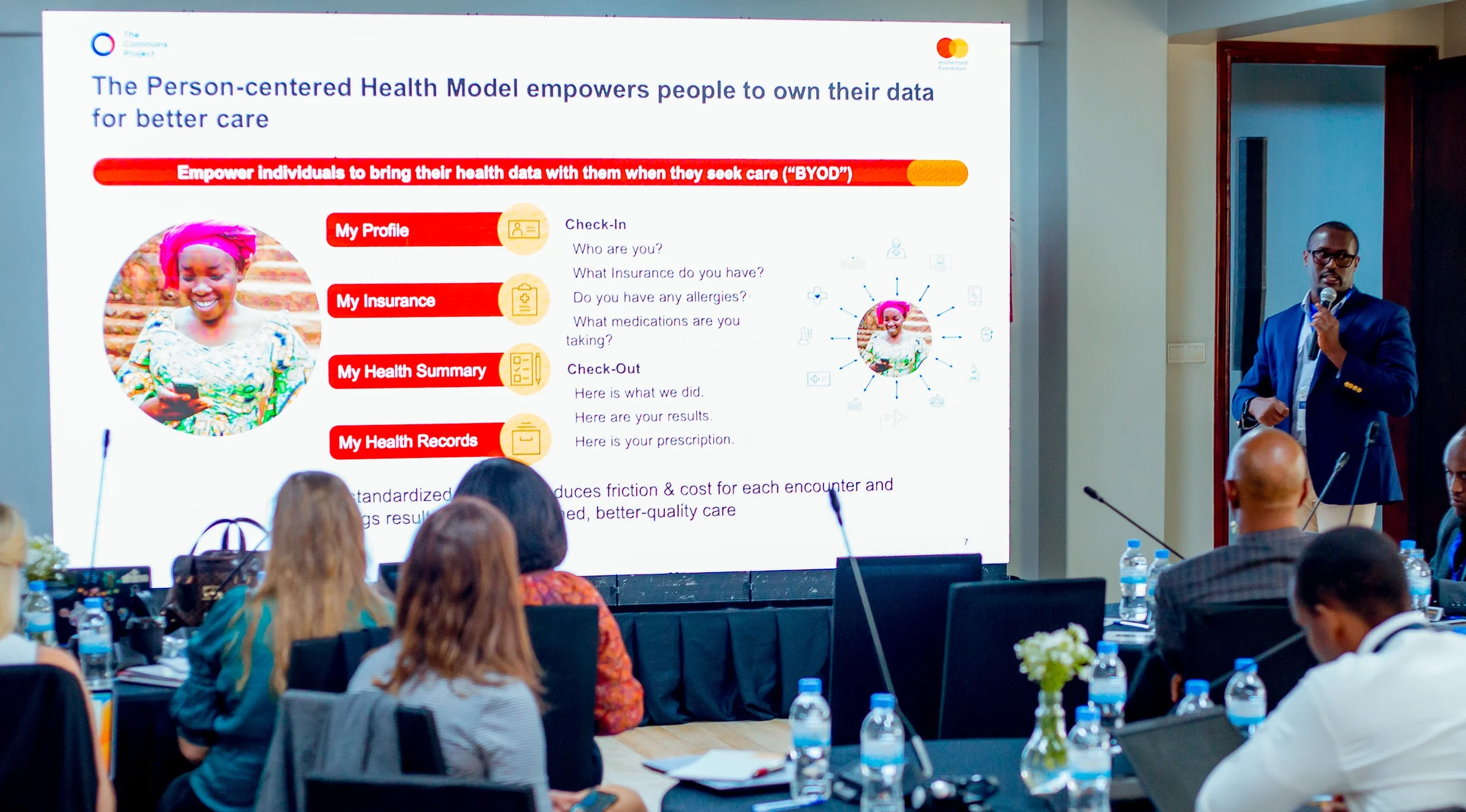
One idea organizes our work: empower individuals to bring their health data with them when they seek care.
Every health encounter has two sides:
At check-in, people are asked to reconstruct their health history from memory: personal information, insurance coverage, medications, conditions, allergies, etc.
At check-out, new information generated during the encounter such as results, diagnoses, prescriptions, and care instructions, typically remains with the provider.
In the person-centered model, a person arrives and leaves in possession of all of the above.
With the person centered model, people share their record at each stop and leave with the new information added.
But health does not begin and end with a clinical encounter. People manage medications, monitor symptoms, use digital health applications and connected devices, care for themselves and others every day at home or while traveling, change insurance providers, or visit an out-of-network emergency room. A person-centered model allows them to merge this information with their clinical records, use it to better understand and manage their health, and share it with caregivers or health professionals.
Rather than accepting today’s fragmented approach, this model asks health organizations to do two things differently:
Give people access to their health information using open standards.
Accept the health information people bring with them.
Standards help health data move between systems, but exchange between institutions alone is not enough. Where systems are fragmented, a person holding their own record can bridge the gap without waiting years for new integrations to be built.
When systems don’t connect, and links between institutions are broken, the person carries their records across the gap.
What We Found: Why Person-Held Records Matter in Africa
Our 2023 digital health infrastructure assessment found that primary care across Africa remains largely paper-based and poorly connected. Digitization is limited, fragmented, and often organized around vertical programs rather than comprehensive, integrated, and standardized national systems.
Across the 17 surveyed countries in Sub-Saharan Africa:
Eight countries had a government plan to digitize primary care through an electronic medical record system.
Only six countries had identified a preferred EMR; the remaining countries reported fragmentation, limited options, or no preferred system.
No country had fully implemented a primary care EMR, and only seven had begun some form of implementation.
In this environment, giving people access to their own records can provide a practical bridge - helping their health information follow them across disconnected facilities, unreliable networks, emergencies, and paper-to-digital transitions.
“When we had the floods, we lost all of our paper. The only health data we had was the information stored in the computers. They were the only personal health records we had.”

1. Enabling policies
Clear policies establish how health data can move between institutions, platforms, and people. We work with government agencies and Ministries of Health to advance open standards, individual data rights, and practical pathways for adoption. This includes supporting the WHO’s consideration of SMART Health Links for International Patient Summaries and collaborating with public institutions on policies that expand trusted health data access and exchange.
2. Open standards
Open standards make health data portable, interoperable, and trustworthy. We help develop and advance the frameworks that allow people to access, retain, and share their information across systems and care settings. Without interoperability, health information cannot reliably reach the person or travel with them.
3. Digitally-enabled health providers
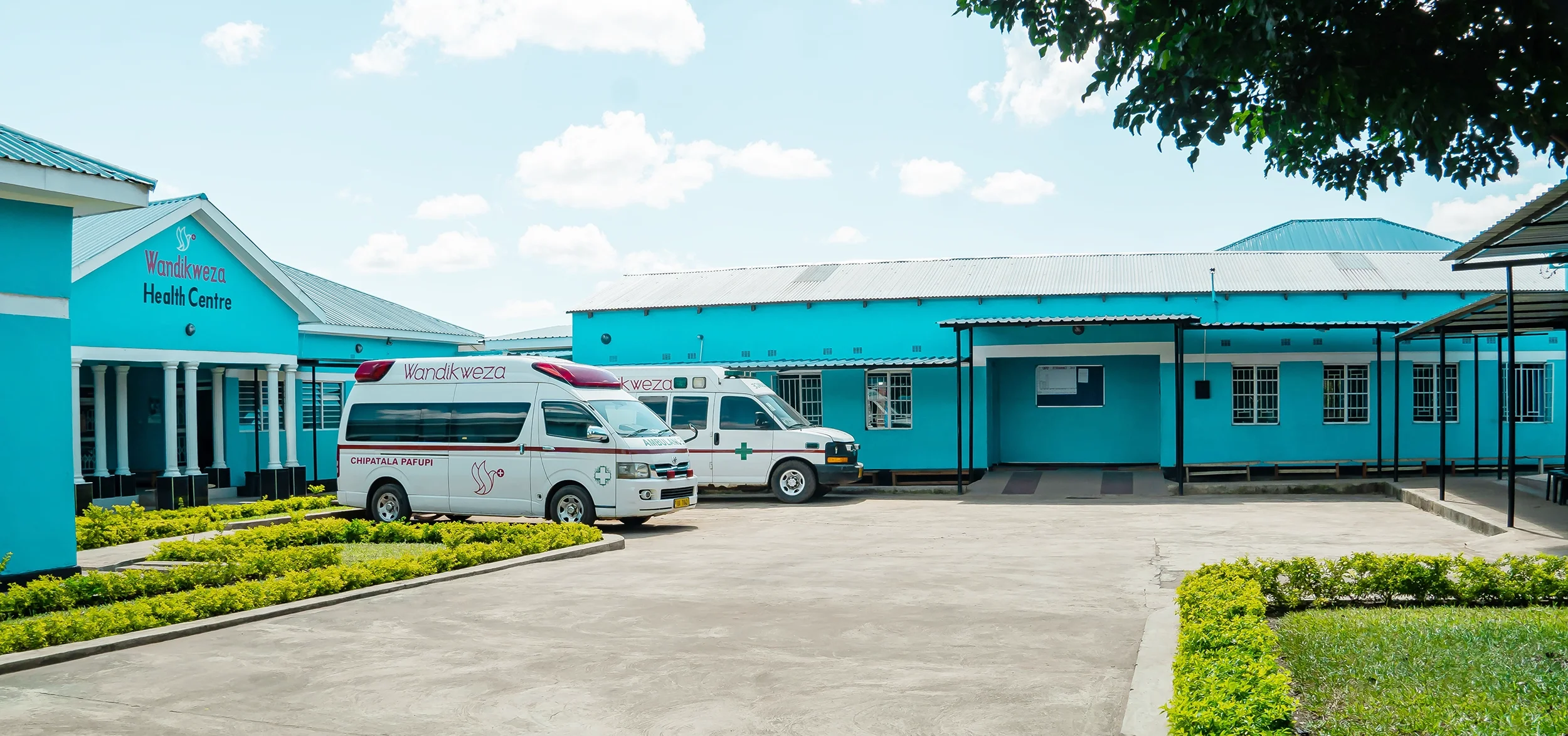
Person-centered care requires a strong foundation: reliable electricity, connectivity, devices, electronic medical records, and systems that can capture and exchange health information. We assess what already exists and work with public institutions, health systems, and local implementers to identify gaps and put the necessary technology and enabling conditions in place.
4. Education and training
We support education and training that equip government teams, health workers, researchers, and communities to implement standards and use digital systems effectively.
Our Africa assessment found that many countries want to adopt standards such as HL7 FHIR but lack the internal expertise needed to put them into practice. It also found that health informatics education often does not reach women or rural communities, or result in employment opportunities.
Our KoraLink program responds to these gaps in Rwanda by training and employing young people—predominantly young women from rural communities—in digital health literacy, entrepreneurship, and the delivery of health and digital services.
5. A robust entrepreneurial ecosystem
Policies, standards, technology, and training create the foundation for person-centered digital health. Entrepreneurship helps that foundation grow, adapt, and respond to changing community needs.
Through KoraLink, we are creating pathways for young people to deliver health and digital services, pursue further training, and develop new economic opportunities. As a founding partner of the Africa Health Tech Summit, we also help connect policymakers, health leaders, entrepreneurs, investors, funders, and technology innovators working to advance digital health across the continent.
Learn more about KoraLink
Learn more about Africa Health Tech Summit
6. Enabling partners
We bring together public institutions, health systems, funders, researchers, standards organizations, technology partners, and local implementers to turn shared ideas into practical infrastructure.
KoraLink is delivered in partnership with TCP Africa, the Society for Family Health Rwanda, and the Rwanda ICT Chamber, with funding from the Mastercard Foundation. JupyterHealth is developed in collaboration with UCSF, UC Berkeley, Duke University, 2i2c, and Project Jupyter.
Across our work, partnerships help translate standards, research, and technology into tools and programs that can be implemented and sustained in real-world settings.
Learn more about Ecosystem Development
Learn more about our Partnerships
Six Building Blocks for Person-Centered Digital Health
This model requires six interconnected building blocks. While the needs and conditions vary by setting, these foundations apply across every global context in which we work.
Person-Centered Digital Health in Practice
CommonHealth | Your health records, all in one place
SMART Health Cards | Portable health information that can be trusted
International Patient Summary and SMART Health Links | Essential health information that can travel across borders
JupyterHealth | Bring health data together for research, care, and AI
CommonTrust Network | Trust infrastructure for portable health records
KoraLink | Digital health skills, services, and economic opportunity